
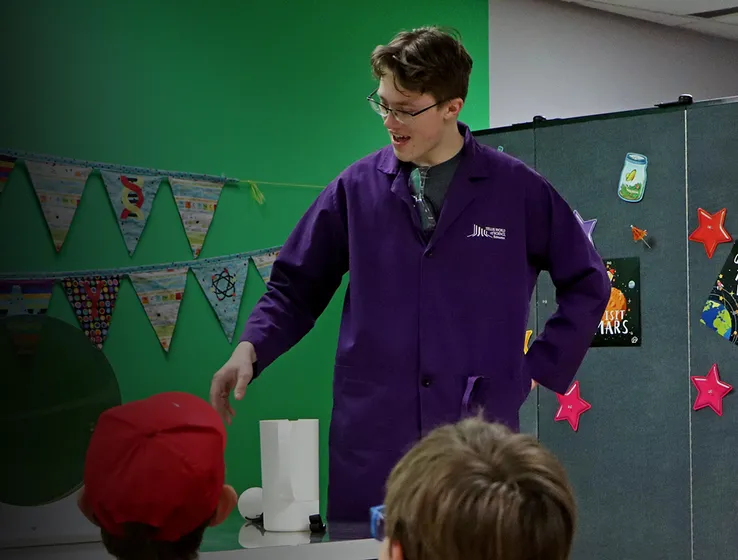
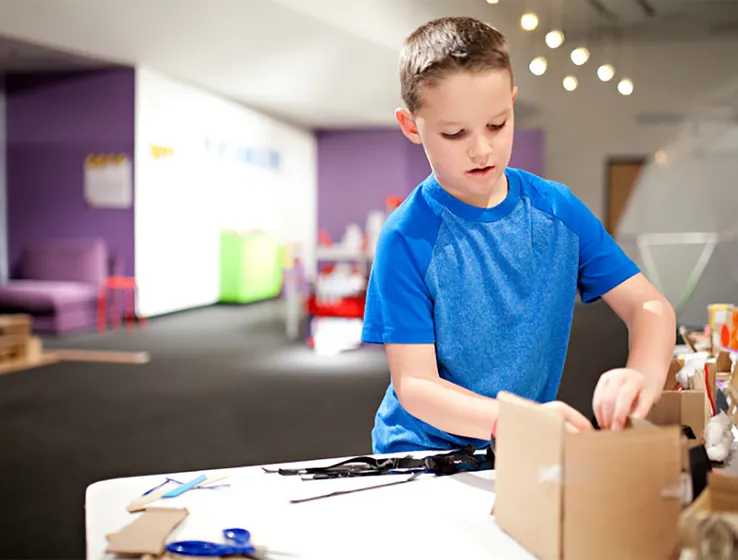
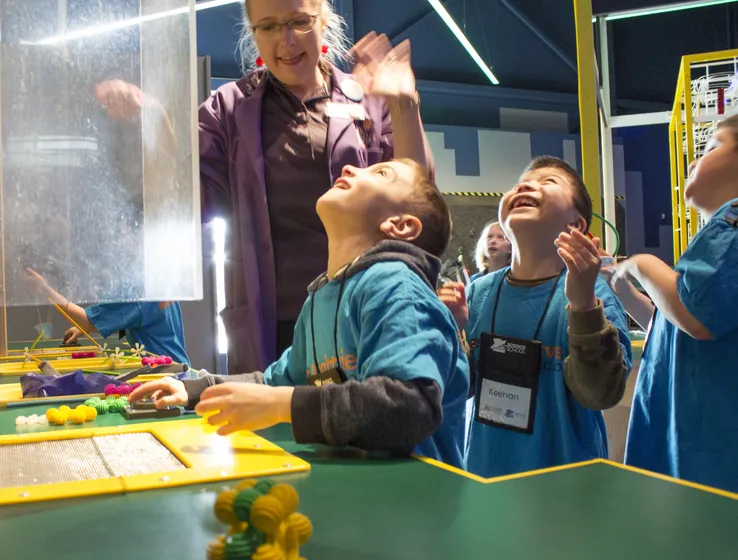
In-person classroom programs allow students to explore grade level concepts and ignite curiosity through exciting hands-on learning.
All classroom programs require a suitable space for small group work, access to power and water, and a garbage can.
To begin your booking request, please visit the SIM Programming Request Form.
Kindergarten

Build It
Exploring Building Materials and Building Challenges
Fans of building and design will discover possibilities by learning about Indigenous Engineers’ work across Alberta! In this station-based program, students will work cooperatively in groups while experimenting with different building materials and discovering solutions to the provided challenges. Students will test their designs to see if they can accomplish their goal.
Pairs well with Assembly Presentation Use the Force(s).
BEST CURRICULUM FIT
Kindergarten
- Matter: Children examine properties of objects.
- Energy: Children explore movement of objects, humans, and other animals.
- Earth Systems: Children examine and describe surrounding environments.


Cool Kids
Get ready for some very COOL science!
Students will explore temperature and the ways humans and animals prepare themselves for cold weather. They will make nose warmers, experiment with temperature, and taste a cool treat made using liquid nitrogen.
Allergy Alert –
-We use homogenized 18% cream, sugar, vanilla extract and cones (contains wheat/gluten)
- We do offer diary-free and non-cone options.
Pairs well with Assembly Presentation Fire and Ice.
BEST CURRICULUM FIT
Kindergarten
- Matter: Children examine properties of objects.
- Earth Systems: Children examine and describe surrounding environments.


Sensational Senses
Give students the chance to explore the world around them using their five senses.
Students discover each sense through a variety of experiments in this station-based program. Can we find food like an ant? Can we make a sound louder or quieter? Can we use popcorn to discover how taste and smell work together? For students who experience the Sensational Senses program, the answer to all of those questions is YES!
Please note: Additional adult support (parent volunteers or school staff) is required for this program. (2 or 3 adults if possible).
Allergy Alert: We use 100% whole grain popping corn.
Pairs well with Mobile Planetarium Program Eyes on the Skies.
BEST CURRICULUM FIT
Kindergarten
• Matter: Children examine properties of objects.
• Energy: Children explore movement of objects, humans, and other animals.
• Earth Systems: Children examine and describe surrounding environments.
GRADE 1


Cold Adapters
How do animals survive in the cold Canadian climate?
Students discover some heat-keeping secrets and investigate how different animals adapt to extreme changes in temperature. Experiment with ice-cold temperatures and deepen students' understanding of the fascinating characteristics of polar bear fur. Classify the survival behaviours of Alberta's winter animals – do they hibernate, migrate or adapt? To complete our learning, we will make a tasty cool treat using liquid nitrogen.
Allergy Alert:
- We use homogenized 18% cream, sugar, vanilla extract and cones (contain gluten).
- We do offer dairy-free and cone-free options.
Pairs well with Assembly Presentation Fire and Ice.
BEST CURRICULUM FIT
Grade 1
• Earth Systems: Students analyze environments and investigate interactions and changes.
• Living Systems: Students investigate and examine needs of plants and animals.
• Scientific Methods: Students engage in and describe investigation.
Build It
Exploring Building Materials and Building Challenges
Wanted – Building Engineers! In this centre-based program, students will work cooperatively in groups and explore different building materials, experiment with them, and build solutions to the challenges that are presented. Students will test their designs to see if they can accomplish their goal.
BEST CURRICULUM FIT
Grade 1
• Matter: Students analyze properties of objects and investigate how they can be changed.
• Living Systems: Students investigate and examine needs of plants and animals.
• Scientific Methods: Students engage in and describe investigation.

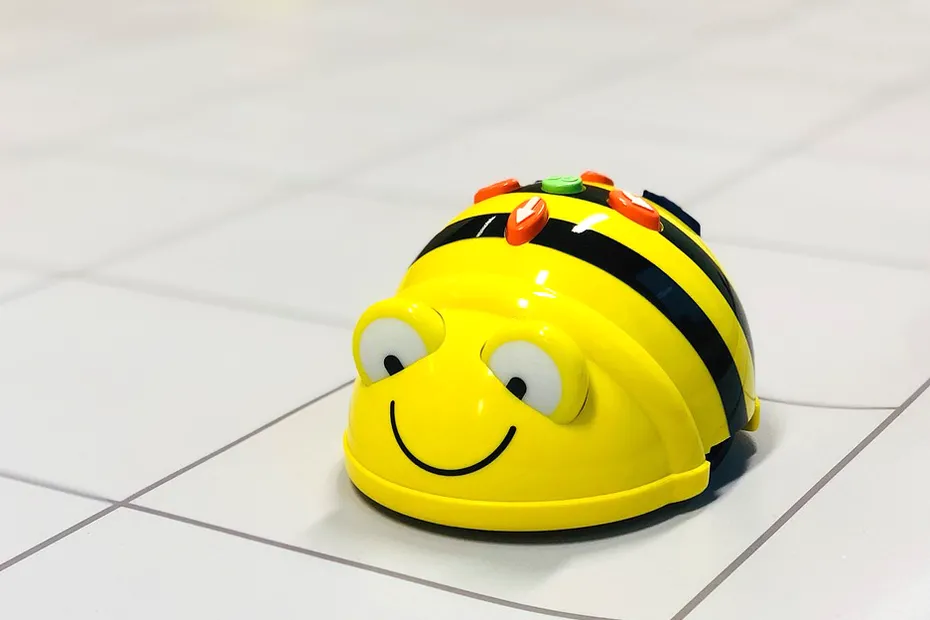
Robotics
Solve problems with a Bee Bot robot using coding concepts and careful instructions.
No experience with robots? No problem! In this program, students will learn the basics of coding through simple push button programming. Students can explore sequencing, step by step instructions, and estimation, while designing solutions to problems.
Pairs well with Assembly Presentation Use the Force(s).
BEST CURRICULUM FIT
Grade 1
• Energy: Students investigate direction, pathway, and speed of moving objects and animals.
• Computer Science: Students follow instructions and relate them to outcomes.

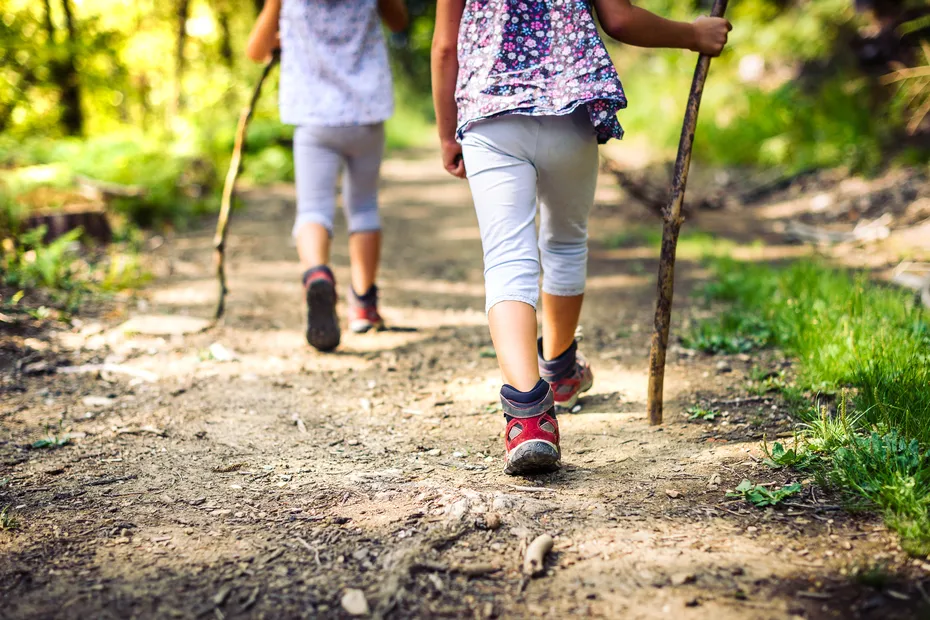
Nature Connections
Let’s slow down and immerse ourselves in studying nature!
In this hybrid virtual and in-person program, students will meaningfully connect with nature. In the virtual video session, students are introduced to how looking closely, using tools, and building connections help scientists make important observations. This is followed by an in-person, outdoor, inquiry-based journaling session. If the weather does not permit going outside, an indoor session will take a closer look at nature using digital microscopes and magnifying glasses.
Classes will receive a selection of nature artefacts with their participation in this program.
Students are required to watch the video tutorial first (approx. 20 minutes), followed by an in-person session at your school (45 minutes).
Pairs well with Mobile Planetarium Program Eyes on the Sky.
BEST CURRICULUM FIT
Grade 1
- Matter: Students analyze properties of objects and investigate how they can be changed.
- Earth Systems: Students analyze environments and investigate interactions and changes.
- Living Systems: Students investigate and examine needs of plants and animals.
- Scientific Methods: Students engage in and describe investigation.
GRADE 2
Build it
Exploring Building Materials and Building Challenges
Fans of building and design will discover possibilities by learning about Indigenous Engineers’ work across Alberta! In this station-based program, students will work cooperatively in groups while experimenting with different building materials and
Pairs well with Assembly Presentation Use the Force(s).
BEST CURRICULUM FIT
Grade 2
- Matter: Students investigate properties of materials and relate them to a purpose.
- Computer Science: Students apply creativity when designing instructions to achieve a desired outcome.

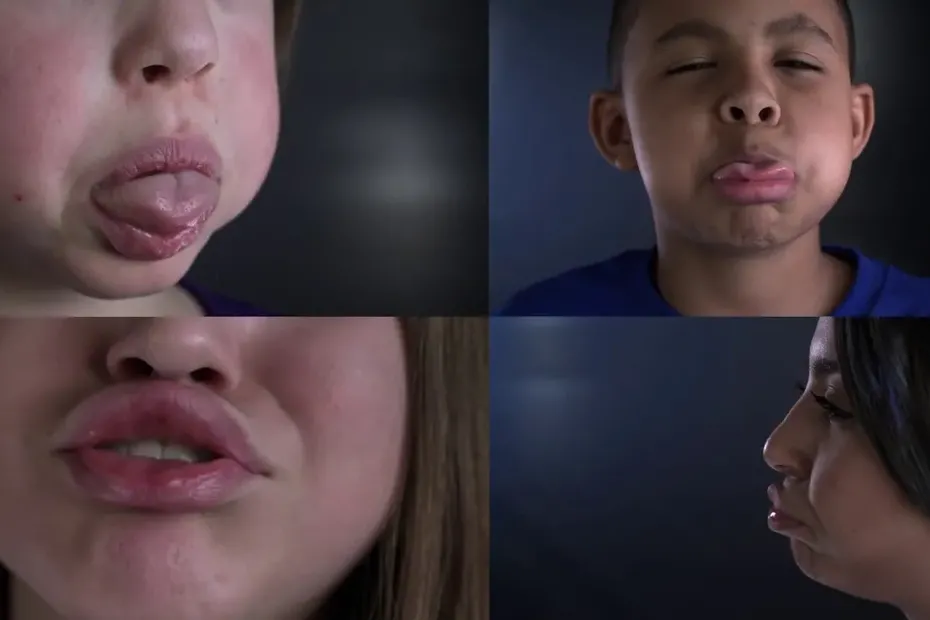
MAKE A SOUND
When a tree falls in the forest and no one is there to hear it, does it still make a sound? Is there sound in outer space? What can we hear?
These and other questions will be answered in this 45-minute hands-on program. We will explore vibration, pitch, and volume of sound and how they affect what we hear with a variety of sound making devices!
Finally, students will make their own harmonica to take home with them, explore sounds, and make some noise of their own!
BEST CURRICULUM FIT
Grade 2
- Energy: Where do light and sound come from? How do they move?
Nature Connections
Let’s slow down and immerse ourselves in studying nature!
In this hybrid virtual and in-person program, students will meaningfully connect with nature. In the virtual video session, students are introduced to how looking closely, using tools, and building connections help scientists make meaningful observations. This is followed by an in-person, outdoor, inquiry-based journaling session. If the weather does not permit going outside, an indoor session will take a closer look at nature using digital microscopes and magnifying glasses.
Classes will receive various nature artefacts for their participation in this program.
Students are required to watch the video tutorial first (approx. 20 minutes), followed by an in-person session at your school (45 minutes).
BEST CURRICULUM FIT
Grade 2
- Earth Systems: How can Earth’s components change in relation to the sun?
- Living Systems: How do plants and animals live and grow?


Splendid Spectrum
Students will light up their learning as they identify light sources, and use LED lights, mirrors and lenses to reflect, refract and disperse light. Can your students manipulate light beams to bounce, bend and pass through various media?
Requires a room that can be darkened and at least two or more electrical outlets.
BEST CURRICULUM FIT
Grade 2
- Energy: Where do light and sound come from and how do they move?

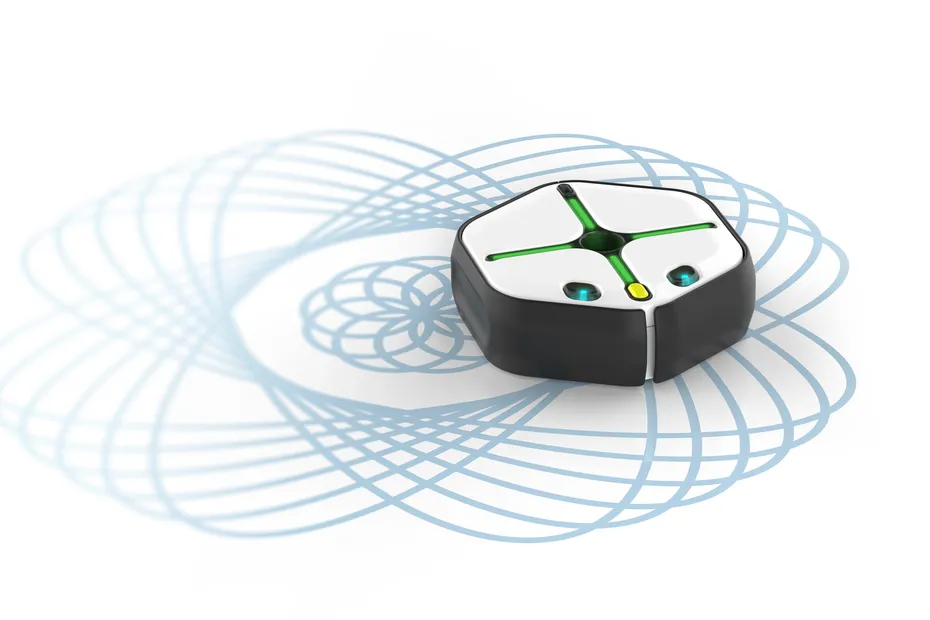
Robotics
Use your creativity and design thinking to code a robot to solve challenges.
No experience coding? No problem! Science in Motion will bring its mobile robotics lab to your school. This lab consists of iRobot Root robots, iPads and accessories and will allow your students to work in pairs to get more hands-on time with the robots and increase their confidence in problem solving and coding.
In this program that is customized to your students’ skill levels, students will explore the basics of coding through simple drag-and-drop block-based coding software. Computational thinking skills will be strengthened as students code creative solutions to robotic problems. Students can expect to accomplish tasks such as teaching a robot to follow directional commands, draw geometric shapes, make a robot light up, sing and dance, and more!
BEST CURRICULUM FIT
Grade 2
- Computer Science: Problem solving and scientific inquiry are developed through the knowledgeable application of creativity, design, and computational thinking.
- Computer Science: Students apply creativity when designing instructions to achieve a desired outcome.
- Create three-step to four-step instructions that achieve a desired outcome
- Debug any errors in a set of instructions to achieve a desired outcome


Chilling Out
How do animals and people adapt to survive in their cold habitats? By connecting with stories of the Arctic, students will explore Arctic animals, Arctic ice and oceans, and consider relationships between people and the land. As a grand finale, we will see how liquid nitrogen can make a very cool treat.
Allergy Note: Dairy products, sugar, and products contacting gluten are used during this program. Dairy alternative available upon request.
BEST CURRICULUM FIT
Grade 2
- Living systems: Students investigate the growth and development of plants and animals and consider their relationship to humans.
GRADE 3

THRILL RIDES
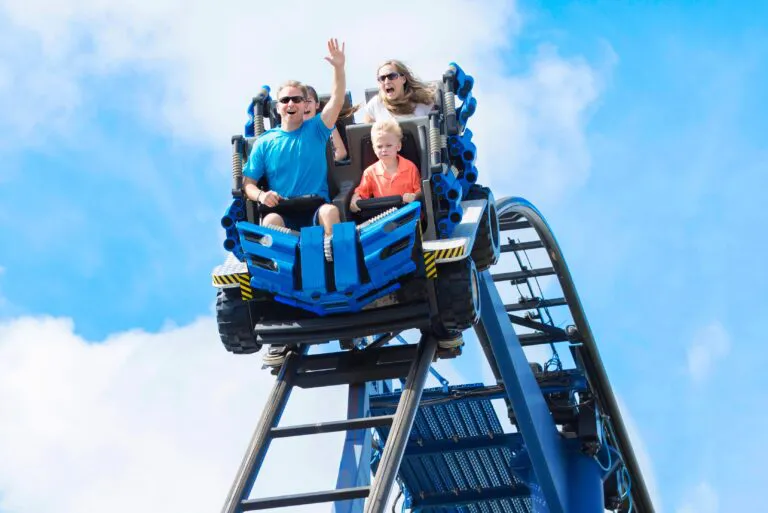
Explore the science of energy and motion to create a ride that promises both fun and excitement!
In this two-part in-person and video tutorial program, creativity is in full force as your students work and communicate in groups (listening to and considering others' points of view and ideas) to build and present a working rollercoaster.
Students are required to watch the video tutorial first (20 minutes), followed by an in-person session at your school (45 minutes).
BEST CURRICULUM FIT
Grade 3
- Energy: Students investigate and explain how forces affect the movement of objects.
Nature Connections
Let’s slow down and immerse ourselves in studying nature!
In this hybrid virtual and in-person program, students will meaningfully connect with nature. In the virtual video session, students are introduced to how looking closely, using tools, and building connections help scientists make meaningful observations. This is followed by an in-person, outdoor, inquiry-based journalling session. If the weather does not permit going outside, an indoor session will take a closer look at nature using digital microscopes and magnifying glasses.
Classes will receive various nature artefacts for their participation in this program.
Students are required to watch the video tutorial first (approx. 20 minutes), followed by an in-person session at your school (45 minutes).
BEST CURRICULUM FIT
Grade 3
- Earth Systems: What visible change can be identified by examining Earth's surface?
- Living Systems: How do plants and animals interact?
Robotics
Use your creativity and design thinking to code a robot to solve challenges.
No experience coding? No problem! Science in Motion will bring its mobile robotics lab to your school. This lab consists of iRobot Root robots, iPads and accessories and will allow your students to work in pairs to get more hands-on time with the robots and increase their confidence in problem solving and coding.
In this program that is customized to your students’ skill levels, students will explore the basics of coding through simple drag-and-drop block-based coding software. Computational thinking skills will be strengthened as students code creative solutions to robotic problems. Students can expect to accomplish tasks such as teaching a robot to follow directional commands, draw geometric shapes, make a robot light up, sing and dance, and more!
BEST CURRICULUM FIT
Grade 3
- Computer Science: Students investigate creativity and its relationship to computational thinking
- Computational thinking includes: designing instructions
- Create a set of instructions that could be followed by a machine to complete a task
GRADE 4
THRILL RIDES
Explore the science of energy and motion to create a ride that promises both fun and excitement!
In this two-part in-person and video tutorial program, creativity is in full force as your students work and communicate in groups (listening to and considering others' points of view and ideas) to build and present a working rollercoaster.
Students are required to watch the video tutorial first (20 minutes), followed by an in-person session at your school (45 minutes).
BEST CURRICULUM FIT
Grade 4
- Energy: Students investigate how forces can act on objects without contact.

Hazmat Heroes
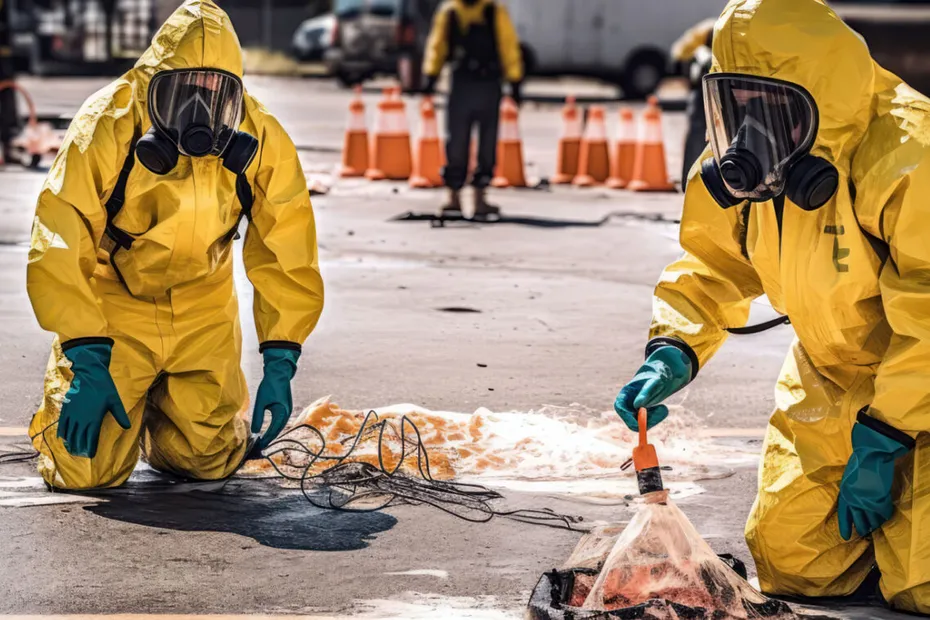
There's been a chemical spill and we need your help!
In this two-part video tutorial & in-person program, your students will be members of a Dangerous Goods Emergency Response Team investigating a chemical spill accident.
In the video tutorial, students will learn about hazardous material symbols, dangerous material transportation and handling, and a bit of background on matter and chemistry.
During the in-person session, students will observe and test several “hazardous” substances to identify the mystery truck spill chemical, helping the Emergency Response Team safely handle the clean-up.
Students are required to watch the video tutorial first (10 minutes), followed by an in-person session at your school (45 minutes).
BEST CURRICULUM FIT
Grade 4
- Matter: Students investigate the management of waste and dangerous materials and describe environmental impacts.
- Scientific Method: Students investigate evidence and reflect on its role in science.
Nature Connections
Let’s slow down and immerse ourselves in studying nature!
In this hybrid virtual and in-person program, students will meaningfully connect with nature. In the virtual video session, students are introduced to how looking closely, using tools, and building connections help scientists make meaningful observations. This is followed by an in-person, outdoor, inquiry-based journalling session. If the weather does not permit going outside, an indoor session will take a closer look at nature using digital microscopes and magnifying glasses.
Classes will receive various nature artefacts for their participation in this program.
Students are required to watch the video tutorial first (approx. 20 minutes), followed by an in-person session at your school (45 minutes).
BEST CURRICULUM FIT
Grade 4
- Earth Systems: Students investigate the systems of Earth and reflect on how their interconnections sustain life.
- Scientific Methods: Students investigate evidence and reflect on its role in science.
Robotics
Use your creativity and design thinking to code a robot to solve challenges.
No experience coding? No problem! Science in Motion will bring its mobile robotics lab to your school. This lab consists of iRobot Root robots, iPads and accessories and will allow your students to work in pairs to get more hands-on time with the robots and increase their confidence in problem solving and coding.
In this program that is customized to your students’ skill levels, students will explore the basics of coding through simple drag-and-drop block-based coding software. Computational thinking skills will be strengthened as students code creative solutions to robotic problems. Students can expect to accomplish tasks such as teaching a robot to follow directional commands, draw geometric shapes, make a robot light up, sing and dance, and more!
BEST CURRICULUM FIT
Grade 4
- Computer Science: Students examine and apply design processes to meet needs
- An algorithm is a sequence of instructions
- Collaborate to design an algorithm to solve a problem
GRADE 5
Hazmat Heroes
There's been a chemical spill and we need your help!
In this two-part video tutorial & in-person program, your students will be members of a Dangerous Goods Emergency Response Team investigating a chemical spill accident.
In the video tutorial, students will learn about hazardous material symbols, dangerous material transportation and handling, and a bit of background on matter and chemistry.
During the in-person session, students will observe and test several “hazardous” substances to identify the mystery truck spill chemical, helping the Emergency Response Team safely handle the clean-up.
Students are required to watch the video tutorial first (10 minutes), followed by an in-person session at your school (45 minutes).
BEST CURRICULUM FIT
Grade 5
- Scientific Method: Students investigate how evidence is gathered and explain the importance of ethics in science.
Nature Connections
Let’s slow down and immerse ourselves in studying nature!
In this hybrid virtual and in-person program, students will meaningfully connect with nature. In the virtual video session, students are introduced to how looking closely, using tools, and building connections help scientists make meaningful observations. This is followed by an in-person, outdoor, inquiry-based journalling session. If the weather does not permit going outside, an indoor session will take a closer look at nature using digital microscopes and magnifying glasses.
Classes will receive various nature artefacts for their participation in this program.
Students are required to watch the video tutorial first (approx. 20 minutes), followed by an in-person session at your school (45 minutes).
BEST CURRICULUM FIT
Grade 5
- Earth Systems: Students analyze climate and connect it to weather conditions and agricultural practices.
Robotics
Use your creativity and design thinking to code a robot to solve challenges.
No experience coding? No problem! Science in Motion will bring its mobile robotics lab to your school. This lab consists of iRobot Root robots, iPads and accessories and will allow your students to work in pairs to get more hands-on time with the robots and increase their confidence in problem solving and coding.
In this program that is customized to your students’ skill levels, students will explore the basics of coding through simple drag-and-drop block-based coding software. Computational thinking skills will be strengthened as students code creative solutions to robotic problems. Students can expect to accomplish tasks such as teaching a robot to follow directional commands, draw geometric shapes, make a robot light up, sing and dance, and more!
Best Curriculum Fit
Grade 5:
- Computer Science: Students apply design processes when creating artifacts that can be used by a human or machine to address a need.
- There are many ways to code, including using visual block-based languages
- A loop is a repetition of instructions used in an algorithm
- Design an algorithm that includes a loop and translate it into code
GRADE 6
Hazmat Heroes
There's been a chemical spill and we need your help!
In this two-part video tutorial & in-person program, your students will be members of a Dangerous Goods Emergency Response Team investigating a chemical spill accident.
In the video tutorial, students will learn about hazardous material symbols, dangerous material transportation and handling, and a bit of background on matter and chemistry.
During the in-person session, students will observe and test several “hazardous” substances to identify the mystery truck spill chemical, helping the Emergency Response Team safely handle the clean-up.
Students are required to watch the video tutorial first (10 minutes), followed by an in-person session at your school (45 minutes).
BEST CURRICULUM FIT
Grade 6
- Scientific Method: Students investigate and describe the role of explanation in science.
Nature Connections
Let’s slow down and immerse ourselves in studying nature!
In this hybrid virtual and in-person program, students will meaningfully connect with nature. In the virtual video session, students are introduced to how looking closely, using tools, and building connections help scientists make meaningful observations. This is followed by an in-person, outdoor, inquiry-based journalling session. If the weather does not permit going outside, an indoor session will take a closer look at nature using digital microscopes and magnifying glasses.
Classes will receive various nature artefacts for their participation in this program.
Students are required to watch the video tutorial first (approx. 20 minutes), followed by an in-person session at your school (45 minutes).
BEST CURRICULUM FIT
Grade 6
- Living Systems: Students investigate the characteristics and components of and interactions within ecosystems.
- Scientific Methods: Students investigate and describe the role of explanation in science.
Robotics
Use your creativity and design thinking to code a robot to solve challenges.
No experience coding? No problem! Science in Motion will bring its mobile robotics lab to your school. This lab consists of iRobot Root robots, iPads and accessories and will allow your students to work in pairs to get more hands-on time with the robots and increase their confidence in problem solving and coding.
In this program that is customized to your students’ skill levels, students will explore the basics of coding through simple drag-and-drop block-based coding software. Computational thinking skills will be strengthened as students code creative solutions to robotic problems. Students can expect to accomplish tasks such as teaching a robot to follow directional commands, draw geometric shapes, make a robot light up, sing and dance, and more!
BEST CURRICULUM FIT
Grade 6
- Computer Science: Students examine abstraction in relation to designing and coding, and describe the impacts of technologies
- Computational artifacts can be designed to address societal needs and wants
- Conditional structures are statements that tell computers to complete different actions based on different situations
- Discuss the role of design and coding in society
GRADE 7-12


Roller Coaster Science
Explore the science of energy and motion to create a thrilling rollercoaster!
In this two-part in-person and video tutorial, creativity is in full force as your students work in teams to design, build and present a working rollercoaster.
Students are required to watch the video tutorial first (20 minutes), followed by an in-person session at your school (45 minutes).
BEST CURRICULUM FIT
Grade 7
- Structures and Forces
Grade 8
- Mechanical Systems
Robotics
Use your creativity and design thinking to code a robot to solve challenges.
No experience coding? No problem! Science in Motion will bring its mobile robotics lab to your school. This lab consists of iRobot Root robots, iPads and accessories and will allow your students to work in pairs to get more hands-on time with the robots and increase their confidence in problem solving and coding.
In this program that is customized to your students’ skill levels, students will explore the basics of coding through simple drag-and-drop block-based coding software. Computational thinking skills will be strengthened as students code creative solutions to robotic problems. Students can expect to accomplish tasks such as teaching a robot to follow directional commands, draw geometric shapes, make a robot light up, sing and dance, and more!
BEST CURRICULUM FIT
- Computer Science
To begin your booking request, please visit the SIM Programming Request Form.